
High-fiber foods you can add to everyday meals
If you want to eat more fiber, it can be hard to know which foods make a noticeable difference. Beans, whole grains, fruits, vegetables, nuts, and seeds offer practical choices, and serving sizes help you compare them.
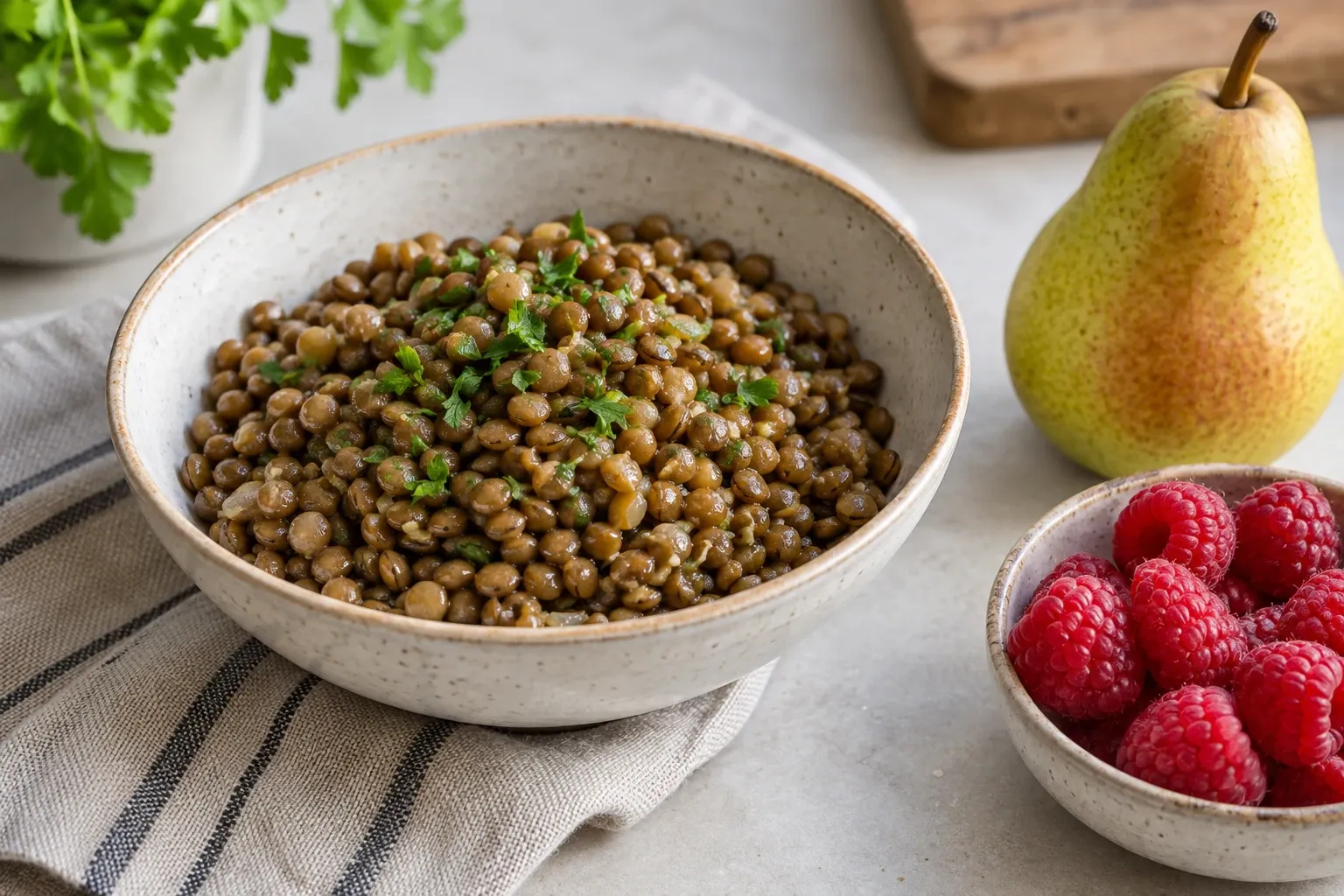
You don’t have to rebuild your meals to get more fiber. A bowl of lentils, a piece of fruit with its skin, or a whole-grain swap can add fiber in familiar ways. The amount varies by food and serving, so comparing portions is more useful than relying on labels such as “high-fiber.” Below, you’ll find everyday options, their approximate fiber amounts, and ways to add them gradually while paying attention to how you feel.
How much fiber should you look for each day?
There isn’t one daily amount that applies to every adult. NIDDK says adults generally need 22 to 34 grams a day, depending on age and sex. Your needs and current intake may differ, so treat that range as a reference rather than a target you must reach in one meal. If you have a condition that affects digestion or have been given dietary instructions, ask a health care professional what amount is suitable for you.
A useful first step is to check how much fiber you already get from typical meals. Look at the Nutrition Facts label on packaged foods, and notice which meals contain beans, whole grains, fruit, or vegetables. Mayo Clinic’s chart lists fiber amounts for specific serving sizes; for example, a cup of boiled green peas provides 9 grams, while a cup of chopped, boiled broccoli provides 5 grams. Those values are approximate and can vary with preparation and portion. The NIDDK guidance on fiber and food choices also lists whole grains, legumes, fruits, vegetables, and nuts as sources.
Which foods offer the most fiber per serving?
Legumes—beans, peas, and lentils—are among the most concentrated choices in Mayo Clinic’s serving chart. One cup of boiled split peas has 16 grams of fiber; a cup of boiled lentils has 15.5 grams; and a cup of boiled black beans has 15 grams. A cup of canned cannellini, navy, or Great Northern beans has 13 grams. These are measured servings, not recommendations to eat a full cup at a sitting. Try a smaller scoop in soup, a salad, or a grain bowl if that fits your meal better.
Seeds, fruit, and vegetables can contribute too. One ounce of chia seeds has 10 grams, while one ounce of almonds has 3.5 grams. A cup of raspberries provides 8 grams; a medium pear has 5.5 grams; and a medium apple with its skin has 4.5 grams. Among vegetables, a cup of boiled Brussels sprouts has 4.5 grams, and a medium baked potato with its skin has 4 grams. Choose foods you like and can eat regularly; there is no need to depend on one standout item.
Whole grains provide another set of options. In the same chart, one cup of cooked whole-wheat spaghetti or pearled barley has 6 grams, a cup of cooked quinoa has 5 grams, and a cup of cooked instant oatmeal has 4 grams. Three cups of air-popped popcorn have 3.5 grams. For packaged bread or cereal, check the serving size and fiber on the Nutrition Facts label because products and portions differ. Mayo Clinic’s high-fiber food chart gives these figures as examples, not a ranking of what you should eat.
How can you fit these foods into meals?
Build from meals you already make. Add beans or lentils to soup, tacos, pasta sauce, or a salad. Have oatmeal with berries, or serve fruit alongside breakfast. Choose brown rice, barley, or quinoa in place of a refined grain when you enjoy the taste and texture. For snacks, fruit, a small portion of nuts, or air-popped popcorn can be convenient. Pairing more than one source across the day makes it easier to vary your meals rather than trying to get most of your fiber from a single food.
For example, breakfast might include oatmeal and raspberries; lunch could be a bean-and-vegetable salad; and dinner could include barley or whole-wheat pasta with vegetables. These are mix-and-match ideas, not a prescribed menu. If you also want meals to include protein, beans, lentils, nuts, or seeds can contribute, and you can choose among other protein-rich foods. For a wider view of how different food groups fit together, explore everyday balanced eating.
What helps when you increase fiber?
Increase your intake gradually. If your usual meals are low in fiber, suddenly adding several large servings of beans, bran, and seeds could be uncomfortable. Mayo Clinic notes that increasing fiber too quickly can lead to gas, bloating, and cramping, and suggests giving your body time to adjust over a few weeks. Add a source in a meal, notice your response, and make further changes at a pace that feels manageable.
Drink fluids as you add fiber. NIDDK advises drinking water and other liquids to help fiber work better, while Mayo Clinic notes that some types absorb water. Your fluid needs depend on personal circumstances, so there is no single amount in this article that applies to everyone. If a health professional has advised you to limit fluids, follow their guidance rather than making a change based on general advice.
How can you tell whether your choices are working for you?
Look at the pattern across several meals, not just one food or one day. Check serving sizes on packages, remember that cooked and uncooked portions are different, and compare foods using the same units. A food that looks especially fiber-rich on a label may be listed for a small serving, so the number alone can be misleading. You can also note whether your meals feel satisfying and whether a gradual increase causes uncomfortable symptoms.
A food’s fiber figure is not the only reason to choose it. Preferences, cooking time, cost, access, and any dietary restrictions all matter. Frozen or canned vegetables and beans can be useful alternatives when fresh ingredients are inconvenient; check package information for the product you buy. If constipation continues, symptoms are severe, or you have a digestive condition that changes which foods you tolerate, contact a health care professional. They can help tailor food and fluid choices to your situation rather than relying on a general list.
Frequently asked questions
Which food has the most fiber per serving?
In Mayo Clinic’s chart, a cup of boiled split peas has 16 grams of fiber, the highest amount among the listed servings. A cup of boiled lentils has 15.5 grams, while a cup of black beans has 15 grams. Portions and preparation matter, so use these figures as comparisons rather than as a required serving.
Do I need to eat only plant-based foods to get fiber?
Fiber is found in plant foods, including beans, peas, lentils, whole grains, fruits, vegetables, nuts, and seeds. You can include these foods alongside other foods you enjoy. Meat and other animal foods do not provide fiber, so meals that include them can also include a fiber-containing plant food.
Can I add several high-fiber foods at once?
It may be more comfortable to increase fiber gradually rather than making a large change all at once. Mayo Clinic notes that increasing it too quickly can cause gas, bloating, or cramping. Add a food or a modest portion, see how you feel, and increase over time. Drink fluids as you raise your intake.
In this section Nutrition