
How to whiten your teeth safely and choose what works
You want a brighter smile, but not guesswork, irritation or wasted money. Here’s how teeth whitening really works, how to pick a method, and how to use it safely.
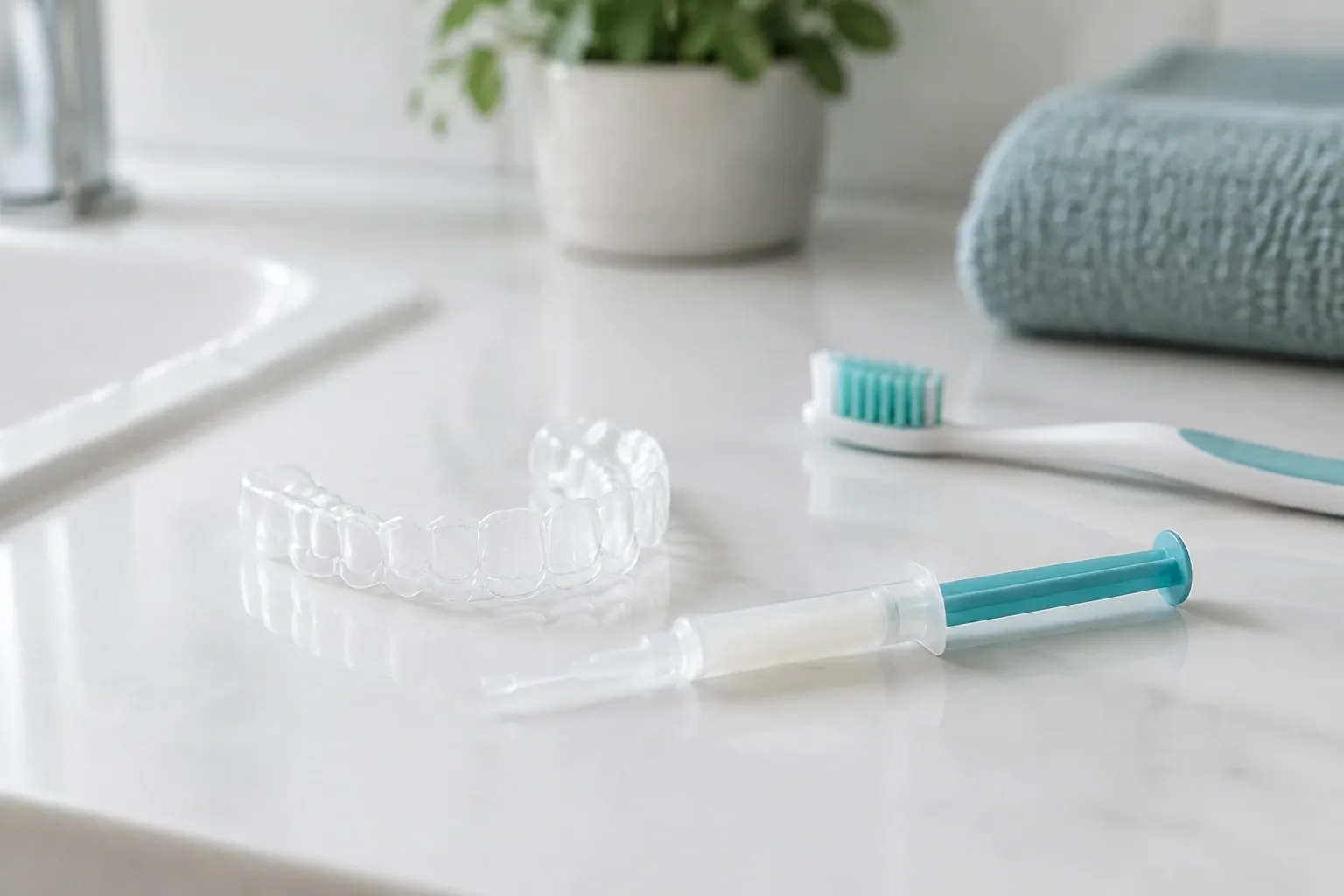
If you’ve noticed coffee stains or a general yellowing and you’re weighing strips, trays or a quick in‑office boost, you’re not alone. Whitening can help when stains sit on or within the tooth’s surface, but not every discoloration—or every mouth—is a good candidate. Below, you’ll see what whitening can and can’t do, how the main options compare, what to expect on sensitivity, and simple steps to lock in results without overdoing it.
What teeth whitening can and can’t do
Whitening gels use hydrogen peroxide or carbamide peroxide to oxidize stain compounds within enamel and dentin; hydrogen peroxide diffuses through enamel within minutes during exposure, which is why contact time and concentration matter, according to the American Dental Association (ADA) overview on whitening.
It works best for yellowing and many food‑and‑drink stains. Response is less predictable for brown discoloration and often poor for gray tones or some medication‑related stains, as explained on the ADA’s consumer page on teeth whitening.
Important limits: bleaching lightens only natural teeth—crowns, veneers and fillings will not change color, which can yield a mismatch if you whiten nearby enamel, per both ADA sources (clinical topic; consumer page).
Who is a good candidate—and is it safe?
Start with a routine exam to check gum health, cavities and the cause of discoloration; the ADA advises an exam and, when appropriate, radiographs before bleaching so problems are treated first and you know what results to expect.
The most common side effects are temporary tooth sensitivity and gum irritation. Transient mild‑to‑moderate sensitivity can affect up to about two‑thirds of users early in treatment and typically resolves shortly after, the ADA reports.
Evidence supports short‑term effectiveness of home‑based peroxide whitening compared with placebo, though the certainty of evidence is low to very low in many trials, according to a Cochrane review.
Which whitening option should you choose?
- In‑office whitening (dentist‑applied gels)
- Best if you want faster, supervised results. A dentist isolates your gums, applies high‑concentration gel and may use light as part of the protocol. OTC methods can take significantly longer to reach similar lightening; one study summarized by the ADA found an OTC technique needed 16 days to match a seven‑day tray system and a single in‑office session.
- Dentist‑provided custom trays (at‑home)
- Good balance of control and supervision; typically worn for days to weeks until the target shade is reached, per the ADA’s consumer guidance.
- Over‑the‑counter (OTC) strips and kits
- Lower peroxide concentrations than in‑office care, so they usually act more gradually. Clinical trials support strip efficacy, but expect a longer timeline and read labels for use limits, the ADA notes.
- Whitening toothpastes and rinses
- Toothpastes remove surface stains with polishing agents; they don’t change intrinsic tooth color. Look for the ADA Seal for stain‑removal claims on toothpaste, per MouthHealthy.
- Some mouthrinses contain about 1.5–2% hydrogen peroxide; 12 weeks of such a rinse achieved color change similar to 2 weeks with a 10% carbamide‑peroxide gel in one study summarized by the ADA’s page on mouthrinse.
What to skip: DIY “natural” hacks (fruit acids, vinegar, charcoal scrubs, oil pulling) lack good evidence and can be abrasive or irritating, the ADA cautions.
How to use whitening safely, step by step
-
Get an exam and cleaning first. You’ll also discuss whether restorations will show after whitening and plan replacements if needed.
-
Match the method to your goal and timeline. In‑office for fastest change; custom trays or strips for gradual change confirmed by your dentist or instructions.
-
Follow directions exactly. More gel, longer wear or stacking methods is not better and raises sensitivity and gum irritation risks.
-
Manage sensitivity. If it occurs, pause a day or two, use a sensitive‑teeth toothpaste, and resume per label. Talk to your dentist about desensitizing gels if needed. Sensitivity is usually short‑lived.
-
Protect your investment with everyday care. Daily brushing and how to floss help keep stains from re‑accumulating. For the basics on routine dental care and solving common issues, see our section guide on keeping teeth and gums healthy.
How to check results—and keep them
- Use a simple shade reference. Many kits include a shade guide. Compare at the same time of day and lighting.
- Expect maintenance. Coffee, tea, red wine and tobacco re‑stain enamel; occasional touch‑ups are typical with at‑home systems. Cochrane reviewers found home peroxide systems work versus placebo in the short term, though more robust research is still needed for long‑term outcomes.
- Know when to switch strategies. If gray or medication‑related discoloration isn’t responding, ask about alternatives like microabrasion or veneers; the ADA highlights minimally invasive options tailored to the type of discoloration (ADA whitening topic; MouthHealthy).
Staying on top of everyday oral hygiene also supports fresher breath—learn more about bad breath causes.
Frequently asked questions
Does teeth whitening work on crowns, veneers or fillings?
No. Bleaching agents lighten natural tooth enamel only, so color-matched dental work will not change, which can leave uneven shades if you whiten nearby teeth. The ADA advises that only natural teeth are affected by bleaching; restorations will not change color. See the ADA overview on whitening for details.
How long until I see results with different methods?
Dentist‑applied in‑office gels can noticeably lighten teeth in one visit. At‑home trays from your dentist usually work over days to weeks. Over‑the‑counter (OTC) products can take longer; one study cited by the ADA found an OTC method needed 16 days to match a seven‑day tray system and a one‑day in‑office treatment.
How common is tooth sensitivity with whitening?
Temporary sensitivity is the most common side effect and can occur in up to about two‑thirds of users early in treatment. It’s typically mild and resolves shortly after stopping or finishing the course. Higher peroxide concentrations and longer contact times can increase the chance.
Do “natural” methods like charcoal or fruit help whiten safely?
Evidence is limited and concerns remain. The ADA notes insufficient proof that charcoal products whiten with adequate safety or effectiveness, and acidic or abrasive approaches can damage enamel. Oil pulling has no documented whitening effect and can have side effects.
What if my teeth look gray or were stained by medications?
Some intrinsic discolorations—such as certain gray tones or medication‑related stains—respond poorly to bleaching. A dentist can explain alternatives like microabrasion, resin infiltration or veneers for specific cases. Start with an exam to identify the stain type.
In this section Dental Health